AI automation and agent development

Move AI from an impressive demonstration into a controlled business workflow.

We build AI-enabled products and automations around real tasks, approved information and measurable operating outcomes. The solution can combine language models, retrieval, structured data, tools, voice, human approvals and existing business systems.

AI agents and workflowsRAG and knowledge systemsVoice and interview systemsDocument intelligence
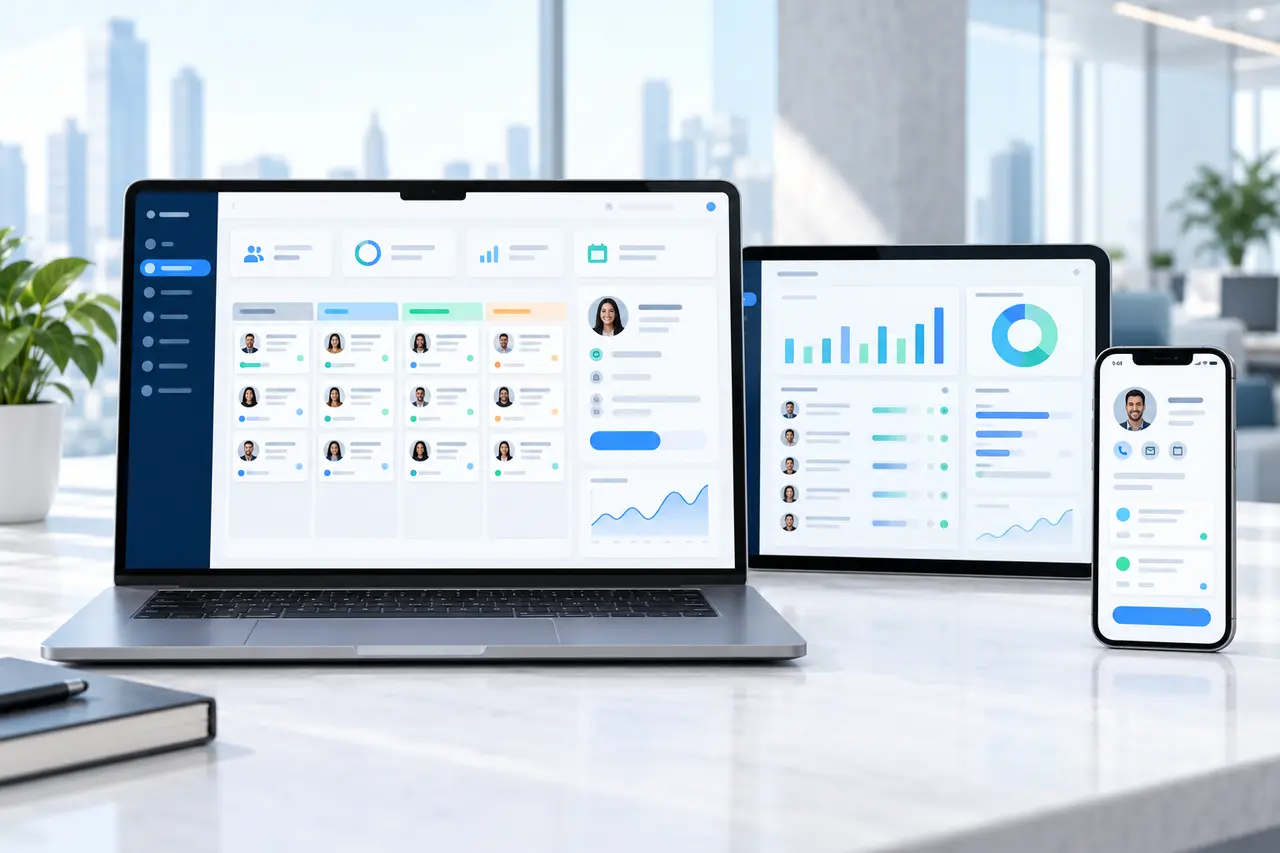
AI-assisted business workflow presented through a clean software interface.
AI & Business AutomationAppnautics Design Lab

What this service solves

An AI feature is valuable when users understand what it can do, the system has the right context, risky actions are controlled and quality can be evaluated. Simply placing a chat box over company data rarely solves the complete workflow.

Appnautics starts with the decision or task that needs improvement. We map required information, tools, permissions, latency, accuracy, cost and human review before choosing models or orchestration patterns.

Production design includes evaluation datasets, structured outputs, observability and fallback behaviour so the team can see where the system performs well and where it needs intervention.

Capabilities

What Appnautics can deliver.

The scope is selected around the outcome and current stage—not forced into a fixed package.

01

AI opportunity assessment

Prioritize use cases by value, feasibility, data readiness and operational risk.

02

RAG and knowledge systems

Ground responses in approved documents, records and access-controlled data.

03

Agentic workflows

Coordinate tools and multi-step tasks with constraints and human checkpoints.

04

Voice and interview products

Combine speech, conversation, evaluation and review interfaces.

05

Document intelligence

Extract, classify, validate and route information from business documents.

06

Evaluation and optimization

Measure quality, latency, failure patterns and cost with repeatable tests.

Applications

Where the capability creates value.

Recruitment workflows

Candidate analysis, guided interviews, structured evaluation and review.

Internal knowledge assistants

Answer questions from approved policies, manuals and operational records.

Document processing

Extract fields, flag errors and move records through controlled workflows.

Customer and staff automation

Support repeated tasks while escalating uncertainty or sensitive actions.

Delivery path

A clear sequence with decisions at every stage.

01

Choose the workflow

Define the user, task, decision, value and acceptable risk.

02

Prepare context and controls

Map data, permissions, tools, outputs and human checkpoints.

03

Prototype and evaluate

Test representative cases, failure modes, latency and operating cost.

04

Integrate

Connect the AI component to the product, APIs and operational interface.

05

Monitor and improve

Review evidence, update evaluations and refine prompts, retrieval and models.

Technology

Selected for the system—not for a trend.

The final architecture depends on users, environment, integrations, security, support and product lifetime. Relevant experience includes:

OpenAI APIsLocal language modelsVector databasesPythonFastAPINode.jsSpeech recognitionText-to-speechWorkflow orchestration
Frequently asked questions

Useful answers before the first discussion.

Does every AI project require training a new model?

No. We first evaluate prompting, retrieval, tools, structured outputs, fine-tuning and local models, then select the smallest reliable approach.

Can AI use private company information?

Yes, with an architecture that enforces authentication, authorization, data separation, logging and approved retention rules.

How do you reduce hallucinations?

We use grounded retrieval, constrained tools, structured outputs, explicit uncertainty, evaluation datasets and human review where the risk requires it.

How is AI operating cost controlled?

We measure actual usage and balance model size, context, caching, local processing, response length and workflow design.

Can you add AI to an existing application?

Yes. We review the current product, data and APIs and introduce the capability through a staged, measurable integration.

Planning a ai & business automation project?

Share what must change, who will use it and what constraints are already known.

Start a conversation →
Have a project in mind?Let's talk